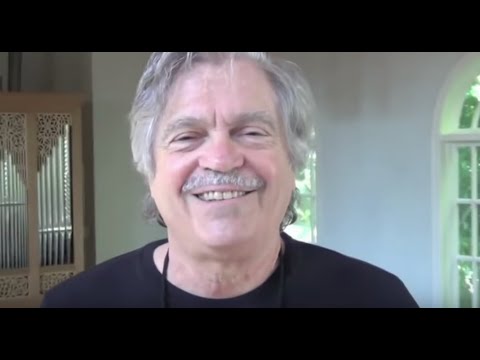
Alan Kay's tribute to Ted Nelson at the Intertwingled festival, presented using a revived Smalltalk-78 system running on emulated 1970s Xerox PARC hardware. It shows live, user-programmable software from that era.
Why Hacker News points people here: HN returns to it again and again as a demonstration of how programmable and composable 1970s systems were compared with today's.
“a great example of what's not-even-close to possible on today's systems”HN comment, 2017
“a great example of what's not-even-close to possible on today's systems”
Shows what is not-even-close to possible on today's systems
Full comment
OP here. Definitely some improvements... but (at least in my eyes) incremental. Notebooks are pretty sweet, but in the hands of very few. They're definitely growing in popularity, which is great. But even the "notebook" concept is a very limited "low pass filter" version of the visions of Engelbart, AKay, TN, etc. The video that AKay has been sharing around in the post than @dang linked to[0] is a great example of what's not-even-close to possible on today's systems. [0] this video
Strongly recommendsryukafalzMar 2023
“Look how programmable this is by the user!”
Alto demo shows user-programmable system beyond modern OSes
Full comment
The Alto did things that even modern computers don't do as well. There's a demo I like to point at for this: this video Look how programmable this is by the user! Today's OSes and their division of software into "applications" erect barriers to software composition that don't need to be there.
RecommendsalankaySep 2017
“If people are interested to see part of what we had in mind”
Demo of revived 1978 Xerox PARC software
Full comment
People often ask me "Is this a Dynabook, is that a Dynabook?". Only about 5% of the idea was in packaging (and there were 2 other different packages contemplated in 1968 besides the tablet idea -- the HMD idea from Ivan, and the ubiquitous idea from Nicholas). Almost all the thought I did was based on what had already been done in the ARPA community -- rendered as "services" -- and resculpted for the world of the child. It was all quite straightforwardly about what Steve later called "Wheels for the Mind". If people are interested to see part of what we had in mind, a few of us including Dan Ingalls a few years ago revived a version of the Xerox Parc software from 1978 that Xerox had thrown away (it was rescued from a trash heap). This system was the vintage that Steve Jobs saw the next year when he visited in 1979. I used this system to make a presentation for a Ted Nelson tribute. It should start at 2:15. See what you think about what happens around 9:05. this video Next year will be the 50 anniversary of this idea, and many things have happened since then, so it would be crazy to hark back to a set of ideas that were in the context of being able to be built over 10 years, and would be ridiculous if we didn't have in 30 (that would be 1998, almost 20 years ago). The large idea of ARPA/PARC was that desirable futures for humanity will require many difficult things to be learned beyond reading and writing and a few sums. If "equal rights" is to mean something over the entire pla
Recommendsseltzered_Apr 2018
“alan kay - tribute to ted nelson at intertwingled fest”
Listed among favorite tech talks
Full comment
#Softwarish - I'm biased a bit more towards interface development: greg wilson - What We Actually Know About Software Development, and Why We Believe It’s True - link steve wittens - making webgl dance - the title is deceptive, it's in some ways a visual crash course in linear algebra - link glenn vanderburg - software engineering doesn't work - link chris granger - in search of tomorrow - link alan kay - tribute to ted nelson at intertwingled fest - this video bret victor - this is already mentioned but if I had to pick one it'd be 'the humane representation of thought' - link #Hardwarish: saul griffith - soft, not solid: beyond traditional hardware engineering - link deb chachra - Architectural Biology and Biological Architectures - link #Getting more meta in technology and history: James Burke - Connections
RecommendsshalabhcSep 2018
“To get another taste of the kinds of systems possible in the 70s, in spite of the constraints, see Kay's demo”
Revived Smalltalk-78 system shows what was possible in the 70s
Full comment
To get another taste of the kinds of systems possible in the 70s, in spite of the constraints, see Kay's demo of a revived Smalltalk-78 system: this video (I believe this system is about 10-20K LOC software in total) Notes about the the revival are here: link
RecommendsalankayApr 2019
“I used it to make my visual material for a tribute to Ted Nelson. See what you think.”
NoteTaker Smalltalk-78 revival demo, about 10,000 lines of code
Full comment
It's out of the context of this thread, but we were quite sure that "simulation-style" systems design would be a much more powerful and comprehensive way to create most things on a computer, and most especially for personal computers. At Parc, I think we were able to make our point. Around 2014 or so we brought back to life the NoteTaker Smalltalk from 1978, and I used it to make my visual material for a tribute to Ted Nelson. See what you think. this video This system --including everything -- "OS", SDK, Media, GUI, Tools, and the content -- is about 10,000 lines of Smalltalk-78 code sitting on top of about 6K bytes of machine code (the latter was emulated to get the whole system going). I think what happened is that the early styles of programming, especially "data structures, procedures, imperative munging, etc." were clung to, in part because this was what was taught, and the more design-intensive but also more compact styles developed at Parc seemed very foreign. So when C++, Java, etc. came along the old styles were retained, and classes were relegated to creating abstract data types with getters and setters that could be munged from the outside. Note that this is also "simulation style programming" but simulating data structures is a very weak approach to design for power and scaling. I think the idea that all entities could be protected processes (and protected in both directions) that could be used as communicating modules for building systems got both missed and reject
RecommendspjmlpJun 2021
“Easy, here is some time travel”
Time travel to an alternate computing world with Smalltalk
Full comment
> Thanks for sharing, I love these types of stories. Really makes me pine for the "old" days, and wonder if there's a parallel universe where technology took a very different route such that languages like APL, Lisp, and Smalltalk are used instead of JavaScript, Java, and C#, and what that world looks like. Easy, here is some time travel, "Alan Kay's tribute to Ted Nelson at "Intertwingled" Festival" this video "Eric Bier Demonstrates Cedar" link "Yesterday's Computer of Tomorrow: The Xerox Alto │Smalltalk-76 Demo" link However to be fair, Java, C# and Swift alongside their IDEs are the closest in mainstream languages to that experience, unless you get to use Allegro, LispWorks or Pharo.
Recommendsinfinite8sDec 2021
“would be an ideal starting interface for e-ink based tablet”
Smalltalk-78 as ideal starting interface for e-ink tablets
Full comment
Well, something like the smalltalk-78 that Alan Kay demos here ( this video ) would be an ideal starting interface for e-ink based tablet.
RecommendsryukafalzJan 2023
“I'm always struck by the useful directions that desktop computers were going in the 70s”
Shows 1970s desktop computing directions that were more composable
Full comment
Every time I see something like this, I'm also reminded of this demo of the Xerox Alto from a few years back. I'll link to the start of the most relevant piece: this video I'm always struck by the useful directions that desktop computers were going in the 70s, and how computing could be so much better than it is right now. But we've veered so off-course from all of this, away from composability and towards independent boxes ("applications") that can't talk to each other at all. Emacs is in some ways the best thing we have today in the other direction, but it pales in comparison to what's possible.
RecommendsryukafalzMay 2023
“The Alto let you compose data live from multiple windows kind of like a shell pipeline does for command-line apps”
Alto composing data live across windows like a shell pipeline
Full comment
I love that this concept tries to separate content from apps. Ever since I saw some of the ways early GUIs differed from today's, I've had a feeling that we've lost something with the way apps in today's desktops are completely isolated from each other. The Alto let you compose data live from multiple windows kind of like a shell pipeline does for command-line apps: this video The Locus and Flows in this concept seem like they could enable a similar workflow, as data isn't confined to "apps" the way it usually would be.
Recommendsseltzered_Jun 2025
“Another reference I usually bring up is Alan Kay's talk on smalltalk”
Alan Kay's talk on Smalltalk
Full comment
In the 'Tools, not Apps' part of the article they reference Michel Beaudouin-Lafon's talk 'A World Without Apps' which goes back in time and shows the Xerox Star operating system: link Another reference I usually bring up is Alan Kay's talk on smalltalk: this video My related comments on this, just to show other stories along this theme: - link - link - link
Cites italankay1Jun 2016
“to create a visual presentation for a tribute to Ted Nelson on his 70th birthday”
Alan Kay's presentation made in revived Smalltalk-78
Full comment
When I write code it is usually either "kiddicode" for future "kiddilanguages" or "metacode" (for future languages ".") I did have a lot of fun last year writing code in a resurrected version of the Notetaker Smalltalk-78 (done mostly by Dan Ingalls and Bert Freudenberg from a rescued disk pack that Xerox had thrown away) to create a visual presentation for a tribute to Ted Nelson on his 70th birthday: this video This particular system was a wonderful sweet spot for those days -- it was hugely expressive and quite small and understandable (my size). (This was the Smalltalk system that Steve Jobs saw the next year in 1979 -- though with fewer pictures because of memory limitations back then).
Cites itshalabhcOct 2017
“(see for a fun one)”
Fun live demo using Smalltalk emulators
Full comment
An easy way to try ST-72 is in your browser here: link and ST-78 here: link The above links run emulators in Javascript and have been used for live demos as well (see this video for a fun one) Related, for a Javascript based live system check out link (also created by Dan Ingalls).
Cites itseltzered_Oct 2018
“an excerpt from the smalltalk era”
Excerpt from the Smalltalk era related to programmable substrate
Full comment
“The real goal is to design the form and nature of the software ‘entities’ — the ‘programmable substrate’ that we manipulate and compose when we program and use the system” Reminded me of bret victors “toolkits, not apps” comment ( link ) and an excerpt from the smalltalk era : this video
Cites itDonHopkinsOct 2018Full comment
Having everything in the same space, and being able to inspect and modify anything in real time by the seat of your pants, was exactly how Dan Ingalls impressed Steve Jobs on his fateful visit to Xerox PARC! It's unfortunate the iPad never did (and never will) achieve that level of power and flexibility. link >Q: What was it like to be at Xerox PARC when Steve Jobs visited? >A: Alan Kay, Agitator at Viewpoints Research Institute >[...] The demo itself was fun to watch — basically a tag team of Dan Ingalls and Larry Tesler showing many kinds of things to Steve and the several Apple people he brought with him. One of Steve’s ways to feel in control was to object to things that were actually OK, and he did this a few times — but in each case Dan and Larry were able to make the changes to meet the objections on the fly because Smalltalk was not only the most advanced programming language of its time, it was also live at every level, and no change required more than 1/4 second to take effect. >One objection was that the text scrolling was line by line and Steve said “Can’t this be smooth?”. In a few seconds Dan made the change. Another more interesting objection was to the complementation of the text that was used (as today) to indicate a selection. Steve said “Can’t that be an outline?”. Standing in the back of the room, I held my breath a bit (this seemed hard to fix on the fly). But again, Dan Ingalls instantly saw a very clever way to do this (by selecting the text as usual,
Cites itgrblovrflowerrrNov 2019Full comment
Yes, this siloing stops me from using annotation features "native" to each app and format as such as well. Instead, I prefer to exfiltrate information from the silos(apps, formats, etc) and put them into my note taking system. Then I can do highlights, annotations, etc. on my own terms and also get the benefits of centralization such as searching and linking(the OP has another post describing their own system, which is pretty cool[1]). Currently I'm using Notion, which is also a silo of its own, but it's one that gives me a lot of control over how I lay my information out(and an escape plan from). There are a lot of perspectives on this issue with data silos and walled gardens. But I'm of the opinion that it's a fairly bad state for all of us "end users". Computers to me are about infinite flexibility and malleability, but ironically the tools we have for annotation and remixing are in practice worse than what we have in the physical world. Reading a book in the physical world, I can converse with the author simply by jotting marginalia with my pencil. It's fluid, intuitive, and the medium of paper encourages it(in fact it can't help but be mutated by my use!: pages get bended, stained, torn, etc.). If I want to go further I can add post-it notes to mark interesting passages, I can xerox some pages and create subsections, if it's a magazine I can just tear them all out! That kind of flexibility just isn't available on a computer. I think it's worth thinking really hard why we
Cites itjiriroNov 2019
“Can I do similar magic as shown in the demo [0] today?”
Demo magic the commenter wants to reproduce today
Full comment
Can I do similar magic as shown in the demo [0] today? I mean .. is there a system/tool/platform which allows that kind of interaction? I know about Smalltalk instances like Squeak[1], Etoys[2], Pharo[3] .. Are these capable of what is shown in the demo? [0] this video [1] link [2] link [3] link
Cites itDonHopkinsMar 2020
“Alan Kay's tribute to Ted Nelson at "Intertwingled" Fest”
Alan Kay's Ted Nelson tribute, on Tron's script editing
Full comment
Ted Nelson: Computer Lib / Dream Machines (1975) [pdf] (worrydream.com) linklink For what it's worth, YC is helping Ted Nelson sell his "Computer Lib / Dream Machines" book: link This book is a truly unique and is worth owning in hardcopy format. link Ted versus The Media Lab [video] (youtube.com) linklink Interview with Ted Nelson (notion.so) linklink Ted Nelson on What Modern Programmers Can Learn from the Past [video] (ieee.org) linklink Ted Nelson struggles with uncomprehending radio interviewer (1979) [audio] (youtube.com) linklink Ted Nelson’s published papers on computers and interaction, 1965 to 1977 (archive.org) linklink Ask HN: What is the best resource for understanding Ted Nelson's ZigZag? linklinklink Alan Kay's tribute to Ted Nelson at "Intertwingled" Fest (how the script of Tron was the first movie script to ever be edited by a word processing program, on the Alto computer) this video "Silicon Valley Story" — a Very Short Romantic Comedy by Ted Nelson A playful story about the microcircuitry of love, with Ted Nelson as an absentminded genius, featuring Doug Engelbart as Ted's father and Stewart Brand as the villainous CEO. Closing song: "Information Flow", sung by Donna Spitzer and the auteur. With Timothy Leary as the Good Venture Capitalist! link Ted Nelson's Channel link
Cites itseltzered_Nov 2020Full comment
"In Imagine a world without apps Shira Ovide asks “a wild question: What if we played games, shopped, watched Netflix and read news on our smartphones — without using apps? Our smartphones, like our computers, would instead mostly be gateways to go online through a web browser.” This question can be extrapolated into a larger question: “What do we want from our technology?"" To quote Bret Victor, "Toolkits, not Apps" : linkthis video Jumping straight into talk about providers, personal data, security, etc. assumes cultural scaffolds of 'personal' around the device. That's fine, but the assumption needs to be made aware.
Cites itmorphleJan 2023Full comment
Alan Kay made scathing comments on the World Wide Web browser (reinventing a broken wheel) at length in a lecture "Normal Considered Harmful" for computer science students at University of Illinois Urbana-Champaign. For context: Alan himself invented WYSIWYG at Xerox PARC. He was present at "the mother of all demo's" by Douglas Englebart. Ted Nelson who invented hyperlinks and Xanadu got Alan in touch with his future wife [2] and Alan was there at Apple when Bill Atkinson made Hypercard. He mentions that when he told Tim Berners Lee about the much better work of Douglas Englebart, Tim was chagrined (that he had not read any of the papers about earlier and much better designs of 28, 25 and 20 years before the WWW browser). Of course Alan also discusses how the web should have been done. In short, it should be that when you click a hyperlink you load a virtual machine in a secure sandbox of a Operating System Kernel. The virtual machine would then render the (bitmap or vector) pages. Operating System 101, well known in 1965. Of course, Alan's team did implement this (several times). I can demo this if you contact me. Email me at morphle [at] ziggo [dot] nl for a video where Alan Kay, Douglas Englebart and Tim Berners Lee meet and talk about this at a forum discussion. You can ask me about anything related to Alan, Ted or Douglas, I maintain an extensive archive with all scientific papers, emails, talks, interviews and lecture video's. Alan, Ted and Douglas worked closely togeth