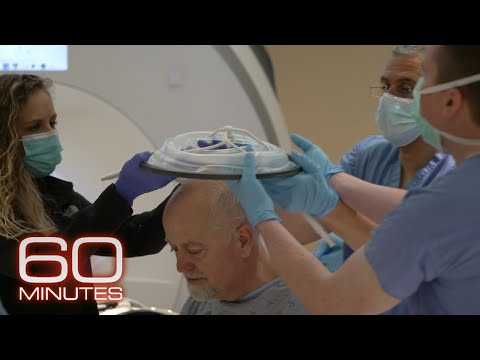
A 60 Minutes report on neurosurgeon Ali Rezai using focused ultrasound on the brain to treat Alzheimer's and addiction. It shows experiments opening the blood-brain barrier and targeting addiction-related regions.
Why Hacker News points people here: HN cites it as a fascinating look at ultrasound-based brain treatments.
“Most fascinating video I’ve seen in a long time.”HN comment, 2024
“Most fascinating video I’ve seen in a long time.”
Ultrasound halting Alzheimer's progression and treating addiction.
Full comment
Have you seen the video on hn a couple of weeks ago about the scientist using ultrasound to halt the progression of Alzheimer’s and to treat addiction? Most fascinating video I’ve seen in a long time. Edit: If you haven’t seen it yet, I highly recommend checking it out this video
Cites itfragmedeMar 2024
“There’s even an ultrasound brain surgery they can do for addiction.”
Shows ultrasound brain surgery for addiction.
Full comment
TDCS is a form of neurostimulation that can be used to treat addiction, among other things. You can’t outrun a bad diet, and if you look at food as an addiction, then you can treat it that way. There’s even an ultrasound brain surgery they can do for addiction. this video
Cites ittoomuchtodoAug 2024
Ultrasound opening the blood-brain barrier for Alzheimer's treatment.
Full comment
It patches a misconfigured reward system pathway in the brain using hormones. > There are two plausible places GLP-1 drugs could lower weight: the body or the brain. In the body, it could change stomach contraction rate, hormone production, etc. In the brain, it could control the mental sensation of hunger. To separate these two effects, scientists bred rats that only had GLP-1 receptors in the body vs. in the brain. The results were unequivocal: Ozempic and its relatives work in the brain. Although they have some effects in the body, these are short-lived and not really relevant to their mechanism of action for weight loss. This should've been obvious the moment there was evidence GLP-1 agonists were preventing addictive behaviors, versus solely digestive system effects. Interestingly, this works by crossing the blood brain barrier, so the next question is: can you speed up the effects by temporarily opening that barrier using ultrasound such is done for Alzheimer's treatment [1]? Also, what does an fMRI look like when someone is being treated with a GLP-1 [2]? [1] this video [2] link
Cites itfragmedeNov 2024
“Apparently if you're really good, you can actually find the part of the brain that has to do with addiction and zap it.”
Ultrasound targeting the brain region for addiction.
Full comment
What if it's a really skinny ice pick? Apparently if you're really good, you can actually find the part of the brain that has to do with addiction and zap it. They use ultrasound after getting it to work with a metal probe. this video