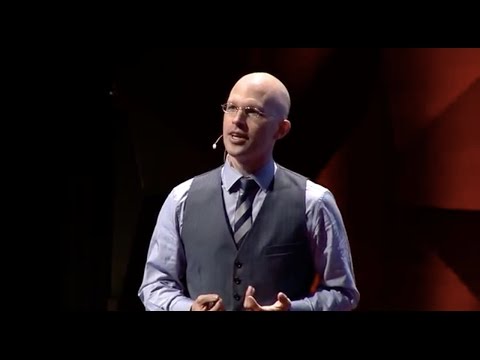
Josh Kaufman's TEDx talk argues that you can reach practical competence in almost any skill with about 20 hours of focused practice, rather than the 10,000 hours often quoted. He describes how becoming a parent led him to rethink how adults learn, and lays out a short method for rapid skill acquisition.
Why Hacker News points people here: HN uses it as the standard counterpoint to the 10,000-hour rule and as an encouraging recipe for starting new skills.
“the threshold for acquiring new skills for personal or professional use is somewhere around 20 hours.”HN comment, 2014
“Anyway, check the TED Talk above, 20 hours to proficiency.”
Contrasts 10k hours with 20 hours to proficiency.
Full comment
How about 20 hours? this video The 10k hours thing is based on how long it took athletes to become the very top of their field. The very top of their highly specific, highly competitive field. It doesnt even mean becoming an 'expert' (whatever that means), let alone just being good at it. Anyway, check the TED Talk above, 20 hours to proficiency.
RecommendskriroDec 2015
“Here's a TED talk he gave which lead me to buy the book”
Kaufman's talk that prompted buying his book.
Full comment
Reminds me of the book "The First 20 Hours" by Josh Kaufman. He gives examples of skills that you can learn fairly well in 20 hours. One of them is programming. I have some issues with the book but overall it's a fun read. Here's a TED talk he gave which lead me to buy the book: this video
RecommendskriroJun 2016
“Link to a cool TED-talk (20 hours)”
Cool talk on learning a skill in 20 hours.
Full comment
It might be a good idea to add a meta section with resources on learning to learn. Books would be stuff like "Pragmatic Thinking and Learning", "The first 20 hours", "The Talent Code", "Inner Game of Tennis" etc. Link to a cool TED-talk (20 hours): this video :)
RecommendsEdmarAug 2019
“It's surprising how much could you can learn in just 20 hours.”
Surprising how much you can learn in 20 hours.
Full comment
A while ago I saw this video: this video is about "The first 20 hours" and there is a book as well. It's surprising how much could you can learn in just 20 hours. You can't be an expert by doing so little but you can learn some tricks for fun.
RecommendsvrajeshkannaAug 2022
“You can be a top 10% in any given field with this.”
20 hours gets you to top 10 percent.
Full comment
The first 20 hours -- how to learn anything by Josh Kaufman - this video You can be a top 10% in any given field with this. 20 hrs is worth the effort on skills you want to learn. My personal advice - Learn only if you put that skill into use immediatly for your good or for the greater good of the society around you. Growth for the sake of growth is the mindset of a virus
Recommendssanti_pantiJan 2023
“The topic boils down to 4 points that seems fairly straight forward.”
Four straightforward points for learning a skill in 20 hours.
Full comment
I remember watching a video about learning a skill in 20 hours. The topic boils down to 4 points that seems fairly straight forward. I can't do it good justice myself so here is a link to those 4 points: link And here is the video itself: this video
Cites itjoshkaufmanMar 2014
“the threshold for acquiring new skills for personal or professional use is somewhere around 20 hours.”
About 20 hours of practice yields practical competence.
Full comment
I recently wrote a book on this topic[1][2], and you're quite right - most people seem to get wrapped up in the status that surrounds the idea of expertise when the real value of this research is what it tells us about how to go about acquiring new skills for personal or professional use. As you mentioned, practicing to the point of enjoying the skill is the most effective strategy. If you can reach the point where practicing is fun, you're much more likely to continue leveling up. Adult learners typically find the first few hours of practicing a new skill extremely frustrating, and a very low percentage will complete even 2-3 hours of deliberate practice if the skill is complex, ambiguous, or challenging. Somewhere around hours 3-10, however, you start to see clear improvements, and pushing through frustration is much less of a factor. That's the point where you start seeing clear results. In my research/experience, the threshold for acquiring new skills for personal or professional use is somewhere around 20 hours. That's not "expertise" - it's being able to produce a desired result or enjoy the experience. In the vast majority of cases, you don't need to be an "expert" to derive value from practicing new skills. Since most people have a hard time pushing through the early frustration barrier, 10-20 hours of strategic, deliberate practice will also give you a surprising level of competence compared to other people. All it really takes is having a smart strategy that ensures
Cites ittincoFeb 2016
“Here's a talk on how long it takes to become 'good enough' at anything”
Talk on how long to become good enough at anything.
Full comment
I'm not an expert, but I researched this once. You can train any particular question that's asked at an IQ test, but someone can always think of new IQ test questions that you will fail if you're not smart enough (i.e. your brain adapts to new problems fast enough). There is a training program (I forgot the name) that trains you at solving IQ test problems sort of in general but it's unclear if it just trains people at solving the sort of questions that IQ test people tend to think of. The way I understand it the most reliable way of training for plasticity if it is possible at all is to learn as many different things as you can. That means: Learn to program, learn a language with a different root (Chinese), learn to dance, learn woodworking, learn to practice law, learn to do team sport, etc.. Basically have as many hobbies as you can. (Switching every X months) making sure they have as little in common as possible. Here's a talk on how long it takes to become 'good enough' at anything: this video Have fun ;)
Cites iti0nutzbJun 2017
“it may take a bit less to get started [1]”
Supports claim that getting started takes less than 10k hours.
Full comment
Actually those 10k hours are a (semi) myth: it may take a bit less to get started [1] and it's all about deliberate practice, not _just_ practice. The „secret” is hid in plain sight: just do stuff. The more - and diverse! - you do, the more you learn. You know more, you can do more, so you can learn more. [1] this video
Cites itSyntoniclesJan 2024
“I extended the 20 hour practice idea from Josh Kaufman [2]”
Source of the commenter's 20 hour practice idea.
Full comment
Here's an old album of the style meter I use [1]. I recommend a soothing blue & green for hobbies, I use red for client work. 20 Hours is the allocation for all skill learning. The tokens are part of a much larger whole as I've unified fun, skills, work, mental health and financial planning into a single system. I have programs that do most of it, but keeping it as a marker/paper UI is critical if you struggle with mental health or motivation, so that you can easily bootstrap yourself. I extended the 20 hour practice idea from Josh Kaufman [2] I highly recommend Sam Harris (Waking Up), Alan Watts, Laozi for mindfulness / meditation, as well as Iain McGilchrist (The Master & His Emissary), Mihály Csíkszentmihályi (Flow) and David Foster Wallace (Infinite Jest) for metaphorical inspiration. Learning to play at life in any moment helps to eliminate tedium & boredom from your vocabulary. [1] link [2] this video
Cites itljouhetJan 2024
“I would start with a first hour, then The first 20 hours”
Part of a progressive learning plan.
Full comment
I would start with a first hour, then The first 20 hours ( this video ), then you just need 90 minutes. Every day