Talks to Watch

The surprising science of happiness | Dan Gilbert

4.7M views · Apr 26, 2012 · 21:20 · 2 HN recommenders · 7 mentions · discussed 2021–2026

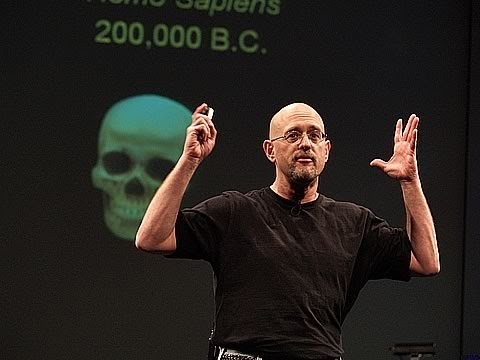
Psychologist Dan Gilbert argues in this TED talk that our psychological immune system lets us become happy even when things do not go as planned. He challenges the idea that we will be miserable if we do not get what we want.

Why Hacker News points people here: HN cites it as one of the best TED talks and as evidence that people adapt to and come to like outcomes they cannot change.

“is one of the best TED talks of all time”HN comment, 2023

What Hacker News said 7

Strongly recommendscarlossouzaJun 2023

“is one of the best TED talks of all time”

Funny 20-minute talk on how brains relate to happiness

Full comment

this video “The surprising science of happiness”, from Dan Gilbert, is one of the best TED talks of all time (over 4M views). In his amazing & funny 20’ presentation, he explains how our brains are wired and how it relates to happiness. The article reminded me of this great content

in “Happiness is a reward from our ancestors” · view on HN
RecommendsjodrellblankJul 2022

“My favourite TED talk pairing is Dan Gilbert's Surprising Science of Happiness”

Evidence that people grow to like what they cannot change

Full comment

> " What can be more important than life partner? " My favourite TED talk pairing is Dan Gilbert's Surprising Science of Happiness[1], where he offers evidence upon evidence that we humans grow to like what we are stuck with and can't change. A year after winning the lottery and a year after losing the use of their legs, lottery winners and paraplegics report being equally happy with their lives, one of his studies shows, for example. And Barry Schwartz's Paradox of Choice talk[2] where he argues that the more choice we have, the less happy we will be after we made the choice, full of doubt whether we could or should have chosen better, questioning if we should choose again, and seeing any flaw in the choice as a reason to blame ourselves for choosing it. In the USA there's over two million marriages every year[3], that seems a lot for people making the most important decision of their lives, to me. > " I think that what people are actually implying when they say “picky” is that I’m materialistic , that I’m looking for a rich guy, for a hot guy, etcetera. " (I think that's different from common usage; a 'picky eater' is not someone looking for rich food or hot food, it's someone with a narrowband filter on what foods they will eat. By contrast, there's a joke about the shopkeeper who gets a bag of potatoes, splits them into two different containers, and marks one container "selected potatoes" with a higher price. 'Selective' means you selected, even people whose criteria is '

in “Ask HN: I’m 41 and still unmarried – what should I do?” · view on HN
Cites itjodrellblankJan 2021

“If we don't have choice, we manufacture happiness.”

Full comment

Prof. Dan Gilbert's studies on Happiness seems to support the paradox of choice: this video If we don't have choice, we manufacture happiness. Something we predict will be somehow worse than "real" happiness, but studies show it's not worse. If we have choice, we predict we will be more happy, but studies show we aren't.

Cites itkovekJan 2022

“See how people will be happy even after missing some opportunities”

Full comment

Just as you can find meaning in the path you took. See how people will be happy even after missing some opportunities - this video . It depends on our prefrontal cortex!

Cites itkovekFeb 2022
Full comment

Here’s a video about happiness. It explains that has something to do with our prefrontal cortex (which IIRC is related to intelligence) - this video

in “Top Performers Have a Superpower: Happiness” · view on HN
Cites itjodrellblankJan 2026
Full comment

> " if I'm going to kill myself by age 30-35? " Maybe you will. But probably whatever stopped you from doing it today and made you push it away for years will feel the same tomorrow, the same next year and at age 30 and 35, saying "if I'm going to kill myself by 40-45" and then "by 50-55". Not always and not everyone, people do suicide, but consider there's 37 million people in poverty in the USA, 18 million with cancer, and a lot more with shit lives in various ways - chronic diseases, disabilities, lost loves, hopeless futures, victims of horrors - and out of that vast amount of misery the USA has "only" 50,000 suicides annually. Much less than I might guess from the numbers. Bodies are 4 billion years of survival machines and they don't quit easily and that includes mental trickery as well as physical resilience[1]. I thought I would commit suicide as a teen. I planned it and tried in my teens and twenties. I thought I would force it in my thirties. Did "it get better"? No not really, mildly worse in several ways. Is the world better for me staying around? No, not really. Did I discover a hope for a brighter future? Maybe[2] but not a strong one. Maybe I'm discovering a bit more selfishness and less obligation to do what other people demand. The years are going by faster now and "the rest of my life" doesn't seem so long. Interesting ideas are still interesting, books are still readable, work is still available, death is coming whether we hurry it or fight it. > " What's t

in “Fedora Asahi Remix is now working on Apple M3” · view on HN
Cites itJoel_MckayJun 2026
Full comment

Indeed, indifferentism must recognize both positions with similar regard. Then address ambiguity with logic and wisdom. For example, Bayes' theorem projects a reasonable expectation given available data. =3 this video

in “The Exhaustion of Talking to a Tool” · view on HN