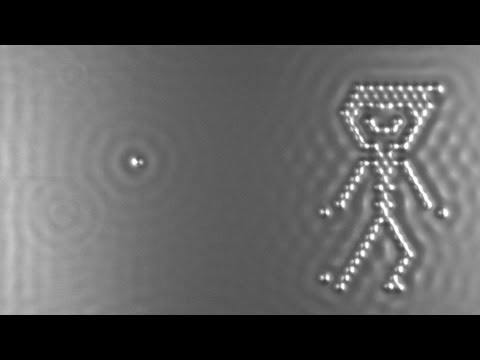
Example educational video where viewers ask about the ripples.
Full comment
> I'm not as pessimistic as Bret Victor [...] ABriefRant I'd actually go one step further than that "rant". In the real world, small physical motions usually have little control significance. Mouse movement and keyboards are among the many exceptions. With XR's hand tracking, that can change. For example, while gaming is focused on "feeling like it's real", so game hands overlap real hands, for getting work done, it's nice to have stretchy arms, so you can reach across the room to grab things. For optimal long-term ergonomics, you want a mix - sometimes you want the exercise of waving your arms, and sometimes you want to achieve the same end by merely twitching a hand resting on a knee or keyboard. So not only did the video reduce all of human motion vocabulary, including gaze and voice, down to a single finger over a sad UI, but even that single finger was used in an impoverished manner. ;) > XR will work much better with some pointing and voice input Eye tracking as well. "Look; point; click" has a seemingly redundant step. When someone is watching an education video, say IBM's atom animation[1], you want to both be able to field common questions like "What are the ripples?", but also notice that they are looking at the ripples, and volunteer related content. One can do prototyping now, with WebVR, google speech recognition, and in-browser or google voice synthesis. [1] this video