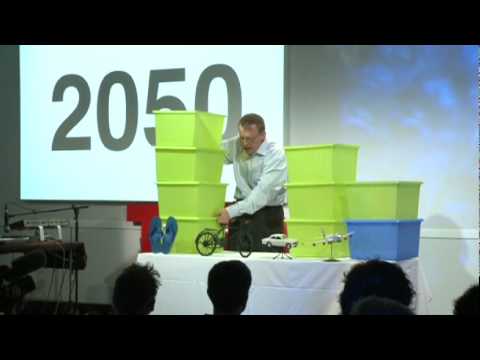
Hans Rosling's TED@Cannes talk uses boxes and animated data graphics to show how world population will grow to about 9 billion. He argues that raising living standards for the poorest is what reduces population growth.
Why Hacker News points people here: HN points to it as a data-driven, worldview-changing explanation of why global population will level off.
“Totally changed (well, confirmed) my world view. Start here”HN comment, 2017
“Totally changed (well, confirmed) my world view. Start here”
Rosling's talks on population growth, poverty and development
Full comment
Sad day. RIP. For some context: Hans is famous here for his fantastic series of TED talks which cover population growth, poverty and development. Totally changed (well, confirmed) my world view. Start here: this video
RecommendspolycasterJun 2020
“this talk by Hans Rosling could be a resourceful addition to the topic”
Relevant talk on population growth
Full comment
While I didn’t read the article, telling from the title this talk by Hans Rosling could be a resourceful addition to the topic: this video
Cites itZeroGravitasFeb 2013
“Hans Rosling seems to think we'll top out at 10 billion.”
Population tops out around 10 billion via reduced child mortality
Full comment
Hans Rosling seems to think we'll top out at 10 billion. this video and the main mechanism is, counter-intuitively, reducing child mortality in the poorest areas.
Cites itsdoeringAug 2016
“I am reminded of Hans Rosling's "Global population growth, box by box"[1].”
Population growth leveling off
Full comment
Whenever I read things like this. I am reminded of Hans Rosling's "Global population growth, box by box"[1]. The only question is, how to transition to a "steady state economy"[2][3] or "non growth economies", when population really reaches some kind of equilibrium. As growth is the only concept humans for the last tens of thousands of years knew, this transition, while absolutely necessary, will be hard and hurt lots of people I believe. [1]: this video [2]: link [3]: link