Talks to Watch

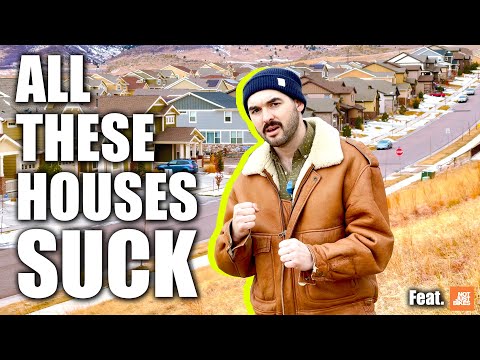
The Suburbs Are Bleeding America Dry | Climate Town (feat. @NotJustBikes)

3.3M views · Feb 7, 2022 · 20:59 · 2 HN recommenders · 8 mentions · discussed 2022–2025

A snarky, comedic video essay from Climate Town, with a guest appearance by Not Just Bikes, arguing that American suburban sprawl and single-family zoning are financially and environmentally unsustainable. It covers how zoning rules shape housing and what viewers can do locally, such as attending zoning meetings.

Why Hacker News points people here: HN commenters cite it as an entertaining but well-sourced explainer on US zoning and housing costs whenever those topics come up.

“A funny, yet very well researched video on that exact same topic of Zoning nonsense. Entertaining AND informative.”HN comment, 2022

What Hacker News said 8

Strongly recommendskelvin0Apr 2022

“A funny, yet very well researched video on that exact same topic of Zoning nonsense. Entertaining AND informative.”

Funny, well-researched video on zoning problems.

Full comment

A funny, yet very well researched video on that exact same topic of Zoning nonsense. Entertaining AND informative. this video

in “California's Vanished Dream, by the Numbers” · view on HN
RecommendsfaytenMar 2022

“These are pretty snarky, but fun videos and the authors list their sources.”

Snarky but fun explainer on US zoning, with sources in the description.

Full comment

There are quite a few factors, I'd encourage checking out the following videos by Not Just Bikes and Climate Towns that cover a broad range of city planning and zoning in the US. Strong Towns Play List by Not Just Bikes (This heavily covers city planning issues in the US): link The Suburbs Are Bleeding America Dry by Climate Towns (This covers zoning): this video How The Auto Industry Carjacked The American Dream (This covers the auto industries impact on US cities.): link Dutch Cities are Better for the Climate (and my sanity) by Not Just Bikes (Not super relevant to zoning, but it's part 1 of The Suburbs Are Bleeding America Dry so I figured I'd link it.): link These are pretty snarky, but fun videos and the authors list their sources. Their video descriptions are worth checking out just to find a ton of reading material on each topic.

in “Americans do not want to return to urban living” · view on HN
RecommendsfaytenSep 2025

“Climate town videos are all well researched and provide an enormous amount of follow-up content from their sources.”

Well-done video essay on infrastructure strain and sprawl.

Full comment

This depends on how you define ROI. Car infrastructure and lack of density reduces tax revenue for cities and strains infrastructure. There are other human benefits to reducing car traffic and use in favor of public transportation: * Reduces air pollution * Noise pollution * Allows a focus on human centric urban planning * Allows for higher density commercial and residential increasing tax revenue * Reduces pedestrian traffic injury Well done video essays: Parking minimums link Noise pollution link Infrastructure strain link More on Infrastructure and Sprawl this video Articles: link link link Climate town videos are all well researched and provide an enormous amount of follow-up content from their sources. Generally, I care about all of the above and I perceive investments in public transportation to have a higher ROI. Some extra historical context is helpful too: link The book The Color of Law by Rothstein is worth a read. In the end there is a balance between public transportation and car dependency and right now the scales are leaning too much in favor of cars.

in “Pontevedra, Spain declares its entire urban area a "reduced traffic zone"” · view on HN
Cites ittenacious_tunaMay 2022
Full comment

I'm hopping on a plane in a minute, but I'll do my best to at least start an example :) The real question is "what do you mean by 'it works fine'?" To me, the effects of suburban living are such that we don't treat people as people unless they're shrouded in a big rolling box of metal. Of course it'll vary from person to person and family to family. I think urban environments offer children much more freedom than corresponding suburban environments, while being safer. There's much more mobility and access to things outside of the house, which I'd argue significantly enriches childhood experience and leads to more adaptable adults. As an adult, I'm overjoyed by the ease with which I can get to things around my city. I never have to deal with traffic, I can walk to three different grocery stores in under fifteen minutes. I have dozens of restaurants in similar distance, and I never worry about having too much to drink to safely drive home. I don't have to deal with traffic, and when friends come to visit (or when I visit them) I can take the train and enjoy a book instead of navigating roads. I feel far healthier and happier with the amount of light physical activity that's been baked into my life just by going about my normal routine. Before we moved to the city, I lived a pretty typical office worker sedentary life: I'd get up, shower, drive (sitting) to work, work (sitting, sometimes standing), then drive home. Now I walk to work and feel invigorated as I come through the do

in “Historic fertilizer crunch threatens food security” · view on HN
Cites itmaerF0x0Nov 2022
Full comment

If AirBnb truly made the market prices go up, then beyond short term shocks it's more of city hall's (and NIMBYism) fault that new supply couldn't come to market (such as rezoning) . America has a massive zoning issue that is causing all kinds of pain and suffering to lower middle class and below. this video link

in “U.S. government to backstop mortgages above $1M for the first time” · view on HN
Cites it__MatrixMan__Jan 2023

“(more on this: )”

Full comment

It's an issue with the zoning laws. Back when it became illegal to ban black people from your neighborhood the next best thing was to ban the kind of housing that black people could afford. So the only place where it's legal to put the kind of housing that addresses the problem is in the city centers which were already established and therefore out of scope for the zoning restrictions. (more on this: this video )

in “Rising rent, not poverty, is the real driver of homelessness” · view on HN
Cites itCapstanRollerNov 2023
Full comment

This is due to zoning laws. Many people desperately want smaller housing, but it's effectively illegal everywhere in the USA. The only alternative is to buy rural land and try to get creative with the law (e.g. your tiny home on an existing rusted old trailer frame is considered a "remodel", etc) or simply build a small cabin and hope no one from the government comes to bulldoze it. Even success here means you're stuck far away from jobs, infrastructure, etc. Existing small houses are priced as high (or higher) than new-build McMansions. See also: "missing middle" this video

in “The US Housing Market Has Become an Impossible Mess” · view on HN
Cites itk99x55May 2024
Full comment

The Lively & Liveable Neighbourhoods that are Illegal in Most of North America : link The Suburbs Are Bleeding America Dry | Climate Town (feat. Not Just Bikes) : this video

in “Measuring the impact of zoning on housing in a city” · view on HN