Talks to Watch

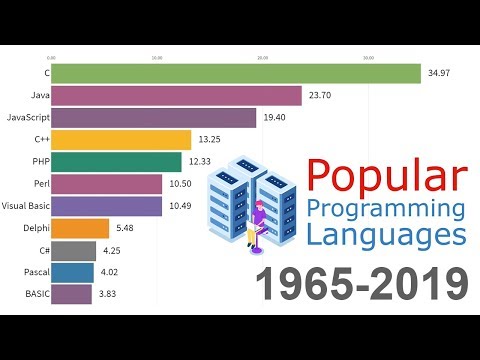
Most Popular Programming Languages 1965 - 2019

7.2M views · Oct 7, 2019 · 4:58 · 0 HN recommenders · 3 mentions · discussed 2019–2020

An animated ranking of the most popular programming languages from 1965 to 2019, built from popularity indexes, GitHub access data and historical surveys.

Why Hacker News points people here: Cited as a data source for historical language popularity, though not as a recommendation.

What Hacker News said 3

Cites itSuddsMcDuffNov 2019

“Source -”

Data source for 1989 language popularity ranking

Full comment

C++ was invented in 1979. In 1989 the most popular programming languages, in order of popularity, were: 1. C 2. Ada 3. Pascal 4. Lisp 5. Fortran 6. C++ 7. Assembly 8. COBOL 9. BASIC 10. APL Source - this video

Cites itcodesectionsMay 2020

“this video[0] gives the following percentages for some dynamic languages in 2008”

Source for 2008 language share percentages

Full comment

> Back then Perl and JS were only really used in web dev Wasn't Perl used pretty extensively for sysadmin tasks, too? It's a dependency of a lot of Unix tools (e.g., git) and I thought that dated to around that time or a bit before. For what it's worth, this video[0] gives the following percentages for some dynamic languages in 2008: JavaScript....21% PHP...........21% Python.........8% Ruby...........4% Perl...........4% Matlab.........3% ================= TOTAL.........60% (I totally forgot about PHP earlier. Oops!) So I stand my my initial claim that it wasn't the case that the _vast_ majority of programmers had yet to experience a dynamic language. Though I can understand it seeming that way to Atwood; didn't he mostly do application development? [0]: Most Popular Programming Languages 1965 - 2019, this video

in “The Magpie Developer (2008)” · view on HN
Cites itmasakAug 2020

“My source for that is”

Source for language mind-share estimate

Full comment

So, I've been thinking about this comment a lot over the weekend. It is interesting to consider a "cool kids" demographic, of developers who stray far enough outside of the mainstream to find small but worthy languages. These would include Scala, Haskell, Kotlin, Clojure, Racket, and Rust. (Plus anyone's favorite non-mainstream language, which I in my haste totally forgot!) Earlier this year I found that, at a rough approximation, language mind-share in 2020 consists of 25% Java, 25% JavaScript, 25% Python, and 25% everything else. (My source for that is this video -- and I'm sure there are any number of possible objections against those numbers... but I think my point holds even if they're several percentage points off.) We live in the strongest language oligoculture since FORTRAN and COBOL in the 1960s. These top three languages, and their communities, act as strong attractors. People flock around these languages because they're popular and established. Despite that, I'm hopeful. I think there's room for experimentation and playfulness. I think evolution in programming languages is still happening, and that solid/interesting ideas are coming mostly from that fringe, not from the established languages. Both Arc and Bel have a decidedly hobbyist feel. Maybe that's why they are not drawing large crowds. I think the target audience consists of people who like to "sketch in code" and whip something up in 10 minutes using a REPL and highly interactive development rather than somethi

in “Ask HN: What happened to PG's Arc and Bel?” · view on HN