Talks to Watch

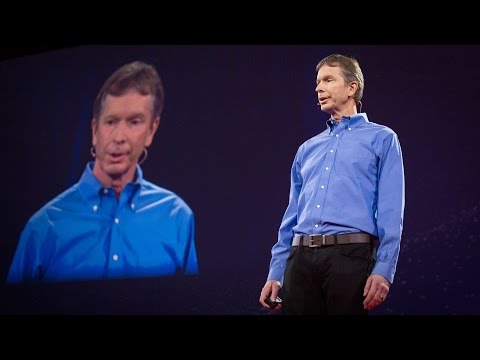
Do we see reality as it is? | Donald Hoffman | TED

3.1M views · Jun 11, 2015 · 21:51 · 3 HN recommenders · 7 mentions · discussed 2016–2024

Cognitive scientist Donald Hoffman argues in this TED talk that evolution shaped perception to track fitness rather than truth. He uses evolutionary simulations and the Australian jewel beetle as examples.

Why Hacker News points people here: Cited in discussions of perception, consciousness and what is real, though some commenters find his conclusions hand-wavy.

“I encourage you to watch Donald Hoffman's 2015 TED Talk”HN comment, 2021

What Hacker News said 7

Strongly recommendspatconOct 2019

“This reminds me of this amazing TED Talk”

Simulations show fitness-only perceivers outcompete those perceiving true reality.

Full comment

This reminds me of this amazing TED Talk: Do we see reality as it is? (Donald Hoffman, cognitive scientist) this video The intellectual bomb in the video is this: Organisms that perceive only "fitness" drive to extinction all organisms that perceive reality as it is. (in model systems simulating environments and creatures navigating them) My take: at every level, it would seem, perceiving true reality is not favoured. Nevermind cognitive biases, that's just one level. Literally the fabric of the universe: spacetime, matter, language, etc. It means nothing that it might feel comfortable or intuitive -- we should question it all.

in “Depressed People See the World More Realistically (2017)” · view on HN
Recommendswh-uwsOct 2016

“fascinating stuff”

Hoffman's hypothesis that perception does not show reality as it is.

Full comment

This is basically the exact hypothesis of a TED talk I saw by cognitive scientist Donald Hoffman. this video fascinating stuff

in “Image Synthesis from Yahoo's open_nsfw” · view on HN
RecommendscartoonworldJun 2021

“I encourage you to watch Donald Hoffman's 2015 TED Talk”

Australian jewel beetle example of misled perception, around 100 seconds in.

Full comment

This is extremely relatable and true. Thank you. The Tinder game is so horrible, 5% of the women get the attention of 80% of the men or more, leaving both the men and women in the other group feeling like there is something wrong with them. People feel the need to edit themselves in order to fit the false narrative created by these gamified dating scenarios, or else experience the fear of dying alone . There is nothing wrong with you. Our complicated, 3-dimensional, deep , personalities and lives are not meant to be reduced to a catalog, best consumed on the toilet, dismissed or accepted instantly based upon a false presentation designed to harness the evolutionary biology of actual living beings. For money. This is not constrained to human society. There is an amusing anecdote of the Australian Jewel Beetle that also experiences the Tinder Effect. This nearly caused their extinction. I encourage you to watch Donald Hoffman's 2015 TED Talk "Do we see reality as it is?"[0] linked below for your convenience. I've timestamped the relevant section, skip forward about 100 seconds or so for the direct discussion of the Australian jewel beetle. [0] - this video

in “Ask HN: Words of encouragement for someone lost in life?” · view on HN
Cites itpsycMar 2017

“The user-illusion metaphor is a central idea in Donald Hoffman's work.”

Hoffman's user-illusion idea of perception.

Full comment

The user-illusion metaphor is a central idea in Donald Hoffman's work. I'm not sure who borrowed it from whom. this video

in “Is Consciousness an Illusion?” · view on HN
Cites ittibbydudezaFeb 2024

“For others here is a TED talk.”

TED talk on perception approximating reality.

Full comment

The brain fakes it to approximate reality - more so for reasons of the limitations of the wetware it runs on than anything else. For others here is a TED talk. this video

in “Hallucination is inevitable: An innate limitation of large language models” · view on HN
Cites itpatconDec 2024

“His lab runs evolutionary simulations”

Hoffman's simulations of truth-seeing versus fitness-seeing creatures.

Full comment

There's something here that I feel is pretty deep, though offensive for some minds: What is the actual consequence of being wrong? Of not getting right the base reality of a situation? Usually, stasis is the enemy that is much great than false information. If people with 90% truth can take a step forward in the world, even if they mistakenly think they have 100% truth, what does it matter? They're learning more and acting more for that step taken. If the mistaken ground truth is false and importantly enough false, they'll learn it bc their experience is grounded in the reality the navigate anyhow. If they don't learn it, it's of no consequence. This is on my mind because I work in democratic reform, and I am acutely aware (from books like "Democracy for Realists", that eviscerate common assumptions about "how democracy works") that it often doesn't matter if we understand how democracy is working, so long as we feel like we do, enough to take steps forward and keep trying and learning. We literally don't even know how democracy works, and yet we've been living under it for centuries, to decent enough ends. I think often about the research of Donald Hoffman. His lab runs evolutionary simulations, putting "creatures" that see "reality" (of the simulation) against creatures that see only "fitness" (the abstraction, but also the lie, that is more about seeing what gets the creature living to the next click of the engine, whether that's truth or falsehood about the reality). [VIDE

CriticalcopperxJun 2021

“he just handwaves the idea that reality is not "brains and neurons,”

Full comment

> [0] - this video While most of the talk is great, he just handwaves the idea that reality is not "brains and neurons," nor what physicists try to model, but he makes no effort in explaining what's the difference between "reality" and "physics." It would be great if someone who understood that last part could explain it.

in “Ask HN: Words of encouragement for someone lost in life?” · view on HN