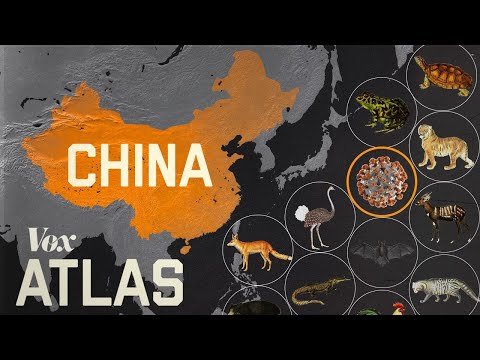
A Vox explainer on how the wildlife trade and wet markets are linked to coronavirus and why new diseases keep emerging in China. It stresses that most people in China do not eat wildlife.
Why Hacker News points people here: HN commenters shared it during early 2020 as a clear explanation of wet markets and how human encroachment on wildlife drives outbreaks.
“Vox put out a pretty good video on wet markets recently.”HN comment, 2020
“I highly suggest you this video [1] from Vox which explains why virus outbreaks”
Explains why outbreaks like SARS and Ebola appear in wet markets
Full comment
I highly suggest you this video [1] from Vox which explains why virus outbreaks (like SARS, Ebola etc) usually appear in wet markets, like the one in Wuhan. [1] this video
RecommendsWhataretheseMar 2020
“Vox put out a pretty good video on wet markets recently.”
Vox explainer on wet markets
Full comment
Absolutely. The worst thing is that whenever these pandemics happen China does ban them but they a few months later they allow them to reopen. Do they think that the same thing won't happen again? Vox put out a pretty good video on wet markets recently. this video
Recommendsslavik81Mar 2020
“I think they make an excellent case for strictly regulating, or even outright banning wet markets.”
Footage of Chinese wet markets and the case for regulating them
Full comment
It's not the same. Live ocean creatures are isolated from each other. They're stored in water-tight containers by necessity. By contrast, live land animals are stored in cages and often stacked on top of each other. Vox has a video explaining "Why new diseases keep appearing in China" [1]. They include footage of Chinese wet markets around the 2:00 mark. I think they make an excellent case for strictly regulating, or even outright banning wet markets. Long ago, Europe had the same problem. The cities were full of wet markets, and were basically the perfect conditions for creating new plagues. There's a nice CGP Grey video on this, "Americapox: The Missing Plague" [2]. [1]: this video [2]: link
RecommendsCaptArmchairMar 2020
“Vox did an excellent video on how this works for Corona”
Vox explains how human encroachment on wildlife leads to outbreaks
Full comment
Here's a study that exactly goes into your question: link The conclusion of that article is that the basic lessons we learn today, were - in part - learned in 1918... Back then, researchers had already traced the emergence of outbreaks to an encampment in France where men and animals were living in close quarters and unsanitary conditions. As to the first part of your question, the answer is that more people encroaching on the animal and wildlife territory while not adhering to basic sanitary practices will increase the chance of new strains appearing and making the jump to humans. Vox did an excellent video on how this works for Corona: this video Such events do not only happen in China in particular but they can happen virtually anywhere in the world. Another ongoing pandemic is HIV/AIDS. Well, it is generally accepted that the jump to humans occurred in West-Africa in the 1920's. But it took time and globalization - increasing mobility - before HIV finally spread across the world: link
RecommendsCaptArmchairJun 2020
“this Vox piece does a great job explaining that side of the equation”
Explains human factors driving outbreak risk, beyond virology
Full comment
I'd like to add to to your statement. The entire quote which this article branches on reads: > “The presence of a large reservoir of SARS-CoV-like viruses in horseshoe bats, together with the culture of eating exotic animals in southern China, is a time bomb.” I'd say that the second part of that statement carries more importance then the exact type of virus and the specific research on that type. I'm no virologist, but if the barrage of news from the last few months have taught me anything, it's that the actions of humans are a big factor in increasing the probability of any type of outbreak. Sure, researching specific families and types of viruses gives us valuable insights. But in and of themselves, tying that knowledge into a larger interdisciplinary framework and translating that then into socio-economic policies, safety guidelines, legal frameworks,... is really important. Going back to the quote above, this Vox piece does a great job explaining that side of the equation: this video
RecommendszubspaceDec 2020
“Only after watching a short but interesting documentary on youtube about wet markets in China [1] I understood why”
Short documentary on why wet markets persist economically in China
Full comment
Only after watching a short but interesting documentary on youtube about wet markets in China [1] I understood why they are so interested in keeping that industry operational. It's as bad as it is, but unfortunately wet markets also seem to play a massive economic role in some parts over there, where many people depend on it. I'd sure hope, that the western world would put more pressure on China, but instead it seems we'll be facing even bigger pandemic threats in the future.. [1] this video
Cites itriyadparvezMar 2020
“This video touches on the topic of outbreak of coronavirus”
Explains how wildlife trade relates to the coronavirus outbreak
Full comment
In preparation of stopping next pandemic, maybe we should have an international agreement like Paris climate change agreement. Like climate change and nuclear weapons this is an existential risk. Yes, outbreak of zootonic diseases is still possible through widely consumed firm animals (chickens, pigs, or cows). But we can dramatically reduce the risk of next pandemic if we stop eating exotic wild animals like bats, which is not hard to give up. We may have been able to stop outbreak of COVID-19 on the first place if we had learned our lessons from SARS outbreak and stopping eating exotics animals. EDIT: bat was used as an example. You can replace any exotic animals in place of bats, the point still stands. This video touches on the topic of outbreak of coronavirus: this video
Cites itslantyyzMar 2020
“Vox : "Why new diseases keep appearing in China" --”
Vox on why new diseases keep appearing in China
Full comment
Aren't SARS and COVID suspected to be the result of viruses jumping species in wet markets that sell wildlife? If that is true, I'm not sure you can just say "it happens", as the wet market environments are man-made. [1] Vox : "Why new diseases keep appearing in China" -- this video [2] Vox Explained: "The Next Pandemic" -- link
Cites itmisiti3780Mar 2020
“This video explains the difference”
Explains differences between wet markets and other markets
Full comment
This video explains the difference: this video Wet markets should be banned because they contain endangered species and the vendors are committing horrible animal rights abuses, oh and they are responsible for multiple corona viruses too.