Full comment
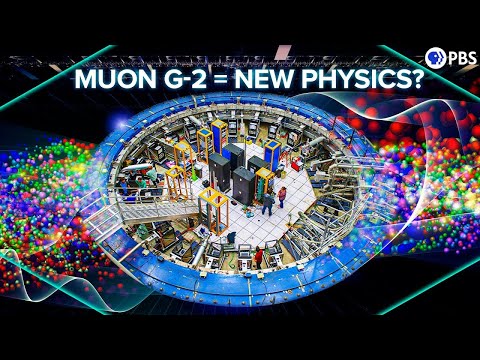
Muon-Catalyzed Fusion [1]. Briefly it's a genuine, and scientifically uncontroversial, form of 'cold' fusion enabled by muons — a more massive relative of the electron that was in the news recently thanks to the potentially interesting results coming out of the Muon g-2 experiment at Fermilab [2]. Like conventional 'hot' plasma fusion, in all experiments to date the energy input needed to sustain the process has exceeded the output, but it may be possible to use it to generate power. Unlike conventional fusion though, it receives relatively little attention, and there is no well-funded international effort to tackle the associated technical challenges. As with conventional fusion the technical challenges seem formidable, but it could be an interesting technology if a way could be found to make it work. Listeners of Lex Fridman's podcast may recall that it was briefly mentioned in the episode he made last year with his father, Alexander Fridman, who is a plasma physicist [3]. As someone who has been interested in the idea for years and barely hears any mention of it, I was pleasantly surprised it came up. It was also covered on the MinutePhysics YouTube channel in 2018 [4]. [1] link [2] this video [3] link [4] link Bonus fact: Muon-Catalyzed fusion was first demonstrated by the Nobel laureate Luis Alvarez, who, with his geologist son Walter Alvarez, later proposed the 'Alvarez hypothesis' for the extinction of the dinosaurs by asteroid impact.