
“If you think LISA is mad this will blow your mind.”
Mind-blowing Space Time episode
Full comment
I feel like you need to see _this_ spacetime video: this video If you think LISA is mad this will blow your mind.
778K views · Oct 12, 2022 · 21:15 · 4 HN recommenders · 7 mentions · discussed 2023–2024
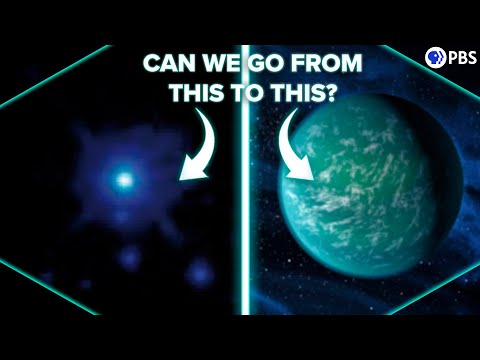
PBS Space Time explains the proposal to use the Sun's gravity as a giant lens, sending a train of small light-sail spacecraft to the focal point roughly 550 AU out. It covers how such a telescope could image exoplanets in surprising detail and the engineering challenges involved.
Why Hacker News points people here: It is the go-to explanation whenever a thread touches on imaging exoplanets or solar gravitational lens telescopes.
“Pretty good explanation of the technique and challenges involved”HN comment, 2023
“If you think LISA is mad this will blow your mind.”
Mind-blowing Space Time episode
I feel like you need to see _this_ spacetime video: this video If you think LISA is mad this will blow your mind.
“Pretty good explanation of the technique and challenges involved”
Explains imaging exoplanets with solar gravitational lens and its challenges
Pretty good explanation of the technique and challenges involved: this video One figure that stands out, the probe would need to be about 550 AU from the sun. Voyager 1 is about 150 AU away from the sun right now, for comparison.
“good old Space Time has a pretty good video on this”
Space Time video on gravitational lens telescopes
good old Space Time has a pretty good video on this this video and it might even be possible and more feasible to use planets link and even earth link as lenses
“Here's a PBS Space Time episode [1] that talks about this general topic”
Covers gravitational lens telescope and swarm of small light-sail telescopes
That's one approach to use the sun as a gravitational lens for looking at exoplanets. There's another approach that instead of one big telescope sends a series of much smaller telescopes, small enough that light sails would be effective for getting them to where they need to go. Here's a PBS Space Time episode [1] that talks about this general topic, and then about the series of smaller telescopes approach. [1] this video
“Here's a PBS Space Time episode that talks about the proposals for building a Sun based gravity lens telescope [1].”
Proposals for a Sun-based gravity lens telescope
Yes, it is possible. Briefly, you use your solar system's star as a gravitational lens. There are currently a couple proposals working their way through the system to do that here in our solar system. It doesn't require technology much beyond what we already have, nor is it much more expensive than other unmanned deep space missions. We wouldn't be able to see pyramid sized objects on alien planets that way because the Sun is only about 1.4 million km diameter, and from other comments it would take a few million km. But for aliens with a bigger star? No problem. Here's a PBS Space Time episode that talks about the proposals for building a Sun based gravity lens telescope [1]. [1] this video
“It starts getting into the specifics of those approaches at 7 minutes in”
Different proposals for solar gravitational lens, specifics from 7 minutes
Here's a PBS Space Time episode [1] from a couple years ago that describes a couple different proposals for how to do this that take quite different approaches. It starts getting into the specifics of those approaches at 7 minutes in if you don't need the introductory material. [1] this video
“presumably advanced alien technology can go further. See for example[2].”
Advanced technology could detect planets from farther away
Right, human technology can detect up to hundreds of light years[1], but presumably advanced alien technology can go further. See for example[2]. Hard to say how far. [1] link [2] this video